
Awareness is Protection: Early Detection of Breast Cancer Can Save Lives – AIIMS Bhopal Study

Awareness is Protection: Early Detection of
Breast Cancer Can Save Lives – AIIMS Bhopal Study
Bhopal. Breast cancer is emerging as one of the most serious public health challenges affecting women globally, including India. Despite continuous advances in medical science, late detection remains a major concern. This not only reduces the chances of patient survival but also makes treatment more complex. Preliminary findings from the ongoing breast cancer screening and research project at AIIMS Bhopal confirm this critical situation. These findings are in line with global warnings issued by the Union for International Cancer Control and the World Health Organization.
According to data collected over the past six months by the Department of Surgical Oncology at AIIMS Bhopal, a total of 167 breast cancer patients were screened as part of this study. Of these, approximately 60% of women were diagnosed at advanced stages, stage three and four, while only 32% of cases were diagnosed at stage two. Early-stage detection, considered most critical for treatment and survival, still remains well below the desired level.
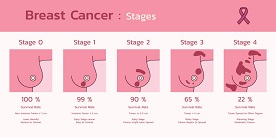
Experts point out that delayed detection leads to prolonged and complicated treatment, relatively weaker outcomes, and higher mortality. This problem is not limited to India but is also seen globally, particularly in low- and middle-income countries. According to physicians, if breast cancer is detected at an early stage, it is highly treatable. In many high-income countries, survival rates exceed 90%. Under the AIIMS Bhopal screening program, women undergo clinical breast examinations. If required, imaging tests such as mammography and further diagnostic procedures are performed.
Women above 40 years of age are advised to undergo regular screening even in the absence of symptoms. Women with a family history of breast cancer are encouraged to seek genetic counseling and risk assessment.
Doctors warn that ignoring painless lumps in the breast or underarm, changes in breast size or texture, nipple discharge, skin redness or dimpling, and persistent pain can be fatal. Neglecting these signs allows the disease to progress gradually and is often diagnosed only at an advanced stage.
Globally, according to the Union for International Cancer Control, breast cancer is the most commonly diagnosed cancer among women. In 2022, approximately 2.3 million new cases were reported worldwide. It accounts for one in every four cancer cases among women. In the same year, nearly 670,000 women died due to breast cancer.
Significant differences in survival rates are observed between countries. While over 90% of women survive breast cancer in high-income countries, the survival rate in India is around 66% and about 40% in South Africa. Late diagnosis and limited treatment facilities are the main reasons for this disparity.
On a global scale, the WHO launched the Global Breast Cancer Initiative (GBCI) in 2021 to address the growing burden of breast cancer and reduce mortality. Currently, in 95% of countries, breast cancer has become the first or second leading cause of death among women, making it a critical public health challenge. WHO estimates that if recommended measures are effectively implemented, the global breast cancer mortality rate could decrease by approximately 2.5% annually by 2040, potentially preventing around 2.5 million deaths. Conversely, if timely action is not taken, by 2030, new cases could rise to 2.74 million and deaths to 875,000 per year, with the greatest impact on resource-limited countries.
AIIMS Bhopal has dedicated oncology operation theaters, advanced diagnostic and imaging facilities, and a multidisciplinary team of surgical, medical, and radiation oncologists, pathologists, and trained counselors. These facilities are providing special benefits to patients from central India and neighboring regions.
Reacting to the study findings, Principal Investigator Dr. Vinay Kumar (Head, Department of Surgical Oncology, AIIMS Bhopal) said that most women reach health facilities at an advanced stage. While early detection allows highly effective treatment, lack of awareness, social hesitation, and fear remain major barriers.
The success of this study is fully credited to the dedicated clinical and research team, including Dr. Abhishek Dhar Dwivedi, Dr. Prachi Karne, Dharmendra Mehra, and Anurudh Mishra, who actively contributed to screening, data collection, counseling, and community awareness activities.
Highlighting the wider significance of this issue, Prof. (Dr.) Madhabananda Kar, Executive Director of AIIMS Bhopal, stated that breast cancer is not only a medical concern but also a serious public health priority. Awareness, early detection, and timely treatment can save numerous lives.
Experts believe that only through combined efforts of health institutions, government, media, and communities can the burden of breast cancer be reduced. Strengthening screening programs and empowering women with correct information can bring decisive changes in the future.








 वसुंधरा का छलका दर्द कहा- मैं खुद की जमीन नहीं बचा पाई तो दूसरों के लिए क्या लड़ूंगी?
 नई कारों को लॉन्च करने की योजना पर काम कर रही टाटा
  ऋषिकेश में चौरासी कुटिया जहां देश-विदेश के लोग करते थे ध्यान और साधना
 बंगाल को लेकर कैलाश विजयवर्गीय का बड़ा आरोप, गिरफ्तारी की जताई आशंका
 हुंडई ने की कारों के सभी मॉडलों की कीमतों में बढोत्तरी की घोषणा