
Concern…................... 94,000 Government Schools Closed in 10 Years! •.......................... Article................... Dr. Chander Sonane

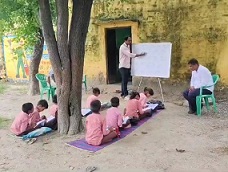
The data provided by the Ministry of Education is alarming. Both the central and state governments should investigate the reasons behind the closure of government schools and make efforts to address the shortcomings. It is a well-known fact that children from poor families study in government schools. Therefore, the closure of these schools directly affects such children. Thousands and even millions of children are being deprived of education.
Concern…
94,000 Government Schools Closed in 10 Years!
• Dr. Chander Sonane
Recently, a distressing piece of news has emerged. It states that in the past decade, 93,779 government schools have been shut down in the country. In 2014–15, there were 1,107,101 government schools operating across the nation, which declined to 1,013,322 by 2024–25. Surprisingly, during the same period, 51,419 new private schools were established.
This information is not the result of a survey conducted by a private organization; rather, it was provided by the Ministry of Education in response to a question in Parliament. In 2014–15, India’s population was approximately 1.309 billion, with a total of 1,107,101 schools and an enrollment of 144,081,075 students. Over the decade, 93,779 schools were closed. By 2024–25, the population had increased to about 1.463 billion, but the number of schools declined to 1,013,322, and student enrollment dropped to 121,589,911. This represents a decline of 22,491,164 students in enrollment over ten years—meaning more than 22 million students were deprived of education in government schools.
Interestingly, during the same period, the number of private schools increased by 51,419. In 2014–15, there were 288,164 private schools in the country, which rose to 339,583 by 2024–25. Enrollment in private schools also saw a significant increase—from 84,642,241 students in 2014–15 to 95,856,710 in 2024–25. Thus, private school enrollment grew by 11,214,469 students over the decade.
The trend of government school closures is more pronounced in northern and eastern states, while southern states have seen relatively fewer closures. For example, in Madhya Pradesh, around 30,000 schools have been shut down over the past decade, while Uttar Pradesh has witnessed the closure of approximately 25,000 government schools. In contrast, Tamil Nadu saw only 285 schools shut during this period, and Kerala reported just 296 closures.
The data presented by the Ministry of Education is deeply concerning. Both central and state governments must examine the reasons behind the closure of government schools and take corrective measures. It is a well-established fact that government schools primarily serve children from economically weaker sections. Therefore, their closure directly impacts these vulnerable groups, depriving thousands and millions of children of education.
In Madhya Pradesh, a school admission drive has recently been launched from April 1, where children are welcomed with traditional tilak on their first day. While this initiative is commendable, the government must also reflect on why schools are closing and why children from these institutions are being deprived of education.
According to the Constitution, it is a fundamental right of children to receive education up to the 8th standard. Thus, this situation amounts to a direct violation of children's rights and must be addressed on priority. Both central and state governments should identify the reasons behind the closure of schools in their respective regions and take immediate corrective action. There are many government primary schools where a single teacher teaches all subjects from classes 1 to 5. Even today, some schools operate in huts or under trees.
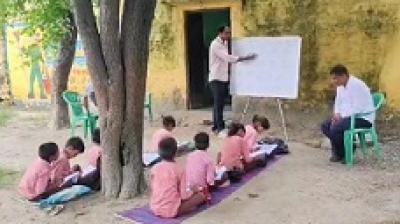
Two examples of schools without proper buildings are sufficient to illustrate the situation. In Harjipura village of Ashta block in Sehore district, Madhya Pradesh, children were forced to study under the open sky, sitting beneath a neem tree on the very first day of the admission drive. Similarly, in Sambhal, Uttar Pradesh, students are studying under a tree because the dilapidated school building was demolished about a year ago. In Sikandarpur Karchali village of Panwasa block, due to the absence of a school building for the past year, children are studying under a tree, and even enrolled students are not regularly attending school.
There are also schools that have no teachers at all—teacher-less schools—where the future of children is left to fate. It is equally important to ensure separate toilet facilities for boys and girls, along with basic infrastructure in schools. Unless these shortcomings in government schools are addressed, the situation will remain unchanged. Real change requires strong willpower—and that is the need of the hour.
*************************

Dr. Chandar Sonane, after retiring from the post of Joint Director in the Madhya Pradesh Public Relations Department, resides in Ujjain. He has a keen interest in contemporary and social issues and candidly expresses his views on matters of public interest through the “Sarokar” column.






 यूपी की सियासत में नई हलचल: Chirag Paswan ने 403 सीटों पर चुनाव लड़ने का किया ऐलान
 SIR में अपमान का मुद्दा गरमाया, Mamata Banerjee ने जनता से मांगा जवाब
 बेंगलुरु की DRDO GTRE लैब को बम से उड़ाने की धमकी
 भोपाल में लोक भवन के सामने सड़क धंसी, पानी बहने से बिगड़े हालात
 केरल में चुनाव प्रचार खत्म, गठबंधन तय करेगा किसकी होगी जीत