Concern…… Clean Drinking Water for All Only Through Compliance with NGT Directions • ..... Dr. Chander Sonane

Concern……
Clean Drinking Water for All Only Through Compliance with NGT Directions
• Dr. Chander Sonane
Amid deaths caused by contaminated water in Bhagirthpura, Indore, the National Green Tribunal (NGT) has recently raised serious questions about the drinking water system in Madhya Pradesh and issued detailed directions to ensure that everyone gets clean drinking water. If these directions are followed, there is a strong possibility that clean drinking water will be available to all. It is expected of the Chief Minister of the state, Dr. Mohan Yadav, that he will ensure full compliance with the Tribunal’s directions so that clean water reaches everyone.
This expectation from the Chief Minister is also because, after the deaths caused by contaminated water in Bhagirthpura, Indore, he has launched a statewide public grievance campaign in two phases across Madhya Pradesh. Announcing the Clean Drinking Water Campaign, the Chief Minister has directed that the first phase be conducted from January 10 to January 28. Similarly, the second phase will run from March 1 to May 31. Under this campaign, public hearings will be held every Tuesday in every city, where any person can raise issues related to drinking water. As part of the campaign, all water purification plants and drinking water storage tanks will be cleaned regularly. Monitoring will also be carried out through a GIS map–based application.
It is noteworthy that in Bhagirthpura, Indore, 24 people died prematurely after consuming contaminated drinking water. However, the government is officially acknowledging only 15 deaths. The state government is providing financial assistance of ₹4 lakh to the family of each deceased person. There is also a demand to increase this compensation amount.
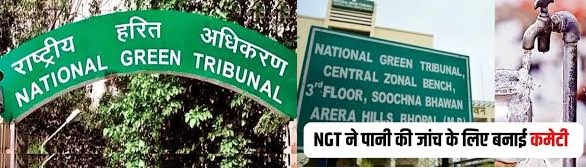
The Central Zone Bench of the NGT, while strongly reprimanding the state government and all municipal corporations, stated that contaminated drinking water is a direct violation of the environment, public health, and Article 21 of the Constitution. Taking suo motu cognizance of diseases caused by contaminated water not only in Indore but across the state, the NGT also observed that this problem is not limited to Indore alone. Cities such as Bhopal, Ujjain, Gwalior, and Khargone are facing a similar situation.
In its directions, the NGT further stated that information on water quality must now be made public in every city of Madhya Pradesh. A 24×7 water grievance app must be developed. Responsibility must be clearly fixed from pipelines to storage tanks. The Tribunal also directed that encroachments near all ponds, wells, and stepwells in the state be removed. Water meters should be installed in every household. Regular chlorination of water must be ensured. Idol immersion in ponds should also be prohibited. Taking cognizance of Bhopal’s lakes, the NGT stated that fecal coliform has been found in the Lower Lake (Chhota Talab), Shahpura, and other water bodies. Drinking water for more than five lakh citizens of Bhopal is being supplied from these sources.
Citing data from the Central Government itself, the NGT highlighted the seriousness of contaminated drinking water and stated that every year about two lakh people in the country die due to consumption of polluted water. From 2005 to 2022, 86 percent of water-borne disease cases were found to be related to diarrhea. Terming these central statistics as extremely serious, the NGT emphasized the urgent need to work earnestly on measures to prevent such situations.
The NGT has issued detailed directions to ensure that clean drinking water is made available to the general public in cities of Madhya Pradesh. However, it is essential that these directions do not remain confined to paper alone, but are implemented in practice. It is expected of the Chief Minister that he will honestly ensure compliance with the NGT’s directions so that clean drinking water reaches the common people of the state.
**********************

Dr. Chandar Sonane, after retiring from the post of Joint Director in the Madhya Pradesh Public Relations Department, resides in Ujjain. He has a keen interest in contemporary and social issues and candidly expresses his views on matters of public interest through the “Sarokar” column.



 पत्नी की हत्या कर शव बोरी में छुपाया, आरोपी ने कबूला जुर्म
 सर्राफा कारोबारी की गोली मारकर हत्या, मुठभेड़ में आरोपी गिरफ्तार
 डेढ़ माह के मासूम को आवारा कुत्ते ने नोंचा, आंतें आ गईं बाहर
 बंगाल चुनाव के बीच ED का एक्शन, कई ठिकानों पर छापेमारी
 AAP ने खटखटाया राज्यसभा सभापति का दरवाजा, 7 सांसदों की सदस्यता पर सवाल