
Somnath: A Pilgrimage of Eternal Consciousness, National Pride, and Renaissance

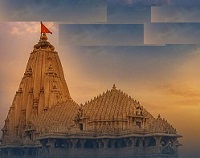
On May 11, 1951, India’s first President, Dr. Rajendra Prasad dedicated the Somnath Temple to the nation while inaugurating it. He had said that Somnath was not merely a temple, but a symbol of India’s spiritual strength and cultural renaissance. From the first major invasion in 1026 to its restoration in independent India, Somnath witnessed many ups and downs. Despite being destroyed repeatedly, the temple stood firm each time with greater resilience. In honor of this historic and cultural journey, “Somnath Swabhiman Parv” is being celebrated tomorrow, Monday, May 11. On this occasion, the following article is presented for the readers’ reflection.
Somnath: A Pilgrimage of Eternal Consciousness, National Pride, and Renaissance
Situated at Prabhas Patan in the Saurashtra region of Gujarat on the shores of the Arabian Sea, the Somnath Temple is not merely a religious site, but a symbol of India’s cultural consciousness, spiritual faith, and indomitable resilience. Revered as the first among the twelve Jyotirlingas of Lord Shiva, Somnath has remained a center of devotion for the Indian people for centuries. The temple is renowned not only for its mythological significance, but also for its inspiring saga of struggle and reconstruction, which has made it famous across the world.
From the first major invasion in 1026 to its restoration in independent India, Somnath has witnessed numerous upheavals. Despite repeated destruction, the temple rose again each time with even greater strength. In recognition of this historical and cultural journey, “Somnath Swabhiman Parv” is being celebrated in 2026. The event commemorates one thousand years since the first invasion in 1026 and seventy-five years since the temple’s re-inauguration on May 11, 1951.
Mythological and Spiritual Significance
According to the Shiva Purana and the Dwadash Jyotirlinga Stotra, Somnath is considered the foremost among the twelve Jyotirlingas. The site is also associated with Lord Shiva, Chandra Dev (the Moon God), and Lord Krishna. It is believed that Chandra Dev worshipped Lord Shiva here and was freed from a curse. Therefore, the site holds immense sanctity in the Sanatan tradition.
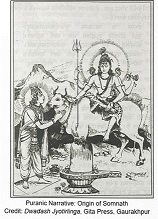
Somnath is not merely a place of worship, but also a living testimony to the continuity of Indian civilization. It demonstrates that no matter how difficult the times and struggles may be, the flame of faith never fades.
The Immortal Saga of Invasions and Reconstruction
The history of Somnath is as glorious as it is turbulent. From the 11th to the 18th century, the temple faced several invasions. The attack by Mahmud of Ghazni in January 1026 is regarded as the first major destructive assault on Somnath. Thereafter, the temple was repeatedly looted and demolished.
Yet after every destruction, devotees, rulers, and society came together to rebuild it. In the 12th century, King Kumarapala reconstructed the temple. In the 13th century, the rulers of Junagadh restored it once again. Later, Ahilyabai Holkar built a new temple here in the 18th century.
This history is not merely the story of rebuilding a temple, but the story of the immortality of the Indian spirit. Somnath has repeatedly conveyed the message that cultural consciousness cannot be destroyed by swords.
Independent India and the Renaissance of Somnath
After India attained independence, the Iron Man of India, Sardar Vallabhbhai Patel visited the ruins of Somnath in 1947. Viewing it as a symbol of rebuilding India’s cultural self-confidence, he resolved to reconstruct the temple in a grand manner. With public support and national sentiment, the present temple was built in the “Kailash Mahameru Prasad” architectural style.
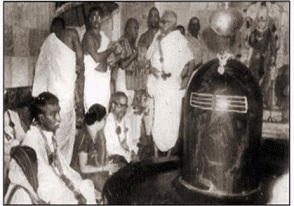
On May 11, 1951, India’s first President, Dr. Rajendra Prasad inaugurated the temple and dedicated it to the nation. He declared that Somnath was not just a temple, but a symbol of India’s spiritual strength and cultural renaissance. Even after seventy-five years, the temple continues to stand as a symbol of national pride.
The Sacrifice of Veer Hamirji Gohil
Many brave warriors sacrificed their lives to protect Somnath. Among them, Veer Hamirji Gohil holds a special place. According to local traditions, he attained martyrdom in 1299 while defending the temple during the invasion of Zafar Khan. His life reflects the spirit of “Rajdharma,” in which protecting society, culture, and sacred places is considered the highest duty. Although detailed official records about him are limited, his place in public memory remains eternal.
Somnath Swabhiman Parv
The “Somnath Swabhiman Parv” being organized in 2026 is a significant occasion of historical and cultural pride. It marks the convergence of two important milestones — one thousand years since the first invasion of 1026 and seventy-five years since the temple’s re-inauguration in 1951.
Prime Minister Narendra Modi, who is also the chairman of the Somnath Trust, will visit Somnath on May 11, 2026, to participate in the ceremony. Describing Somnath as a symbol of “India’s invincible spirit,” he stated that the temple inspires victory over destruction and cultural renaissance. Emphasizing the concept of “Vikas Bhi, Virasat Bhi” (Development as well as Heritage), the Prime Minister announced special worship ceremonies for the next 1,000 days. He also appealed to the people of the country to visit Somnath during this historic period.
During programs organized in January 2026, continuous chanting of the “Omkar Mantra” was held for 72 hours. A symbolic “Shaurya Yatra” featuring 108 horses was also carried out to pay tribute to the heroes who protected Somnath.
Grand Architecture and Spiritual Aura
The Somnath Temple is unique for its magnificent architecture. Its spire rises 150 feet high, crowned with a massive 10-ton kalash. A 27-foot-high flagstaff symbolizes its spiritual glory.
The temple complex includes the sanctum sanctorum, assembly hall, and dance pavilion. It is adorned with 1,666 gold-plated kalashas and 14,200 flags, reflecting its rich traditions and devotional grandeur.
Every year, nearly ten million devotees visit the temple for darshan. More than 1.4 million devotees participate in the Bilva Puja alone. Thus, Somnath continues to be one of India’s most active and vibrant pilgrimage centers.
A Blend of Culture and Modern Technology
Somnath beautifully integrates culture with modernity. The “Light and Sound Show,” launched in 2003, was upgraded in 2017 with modern 3D laser technology. The show presents the glorious history of the temple in a highly impactful manner.
Through events such as the “Vande Somnath Kala Mahotsav,” dance traditions dating back 1,500 years have been revived. As a result, Somnath has emerged not only as a religious center, but also as a hub of cultural renaissance.
Social Service and Public Welfare
The Shree Somnath Trust is not confined solely to religious activities, but is actively engaged in education, healthcare, environmental protection, and social welfare. The trust runs skill-development programs for youth and women, including computer education, tailoring, digital literacy, and beauty training. Through the “School on Wheels” initiative, digital education is being delivered to rural areas.
In the healthcare sector, free dental and eye camps are organized for underprivileged families. Wheelchairs, hearing aids, and crutches are distributed to differently-abled individuals.
During the COVID-19 pandemic, the trust made remarkable contributions. Assistance worth ₹8.73 crore was provided during the first wave and ₹2.21 crore during the second wave. A donation of ₹1 crore was made to the Chief Minister’s Relief Fund, while oxygen plants and concentrators were also arranged.
Environmental Conservation and Women Empowerment
Today, Somnath has also become an example of sustainable development. In 2018, it was declared a “Swachh Iconic Place.” Vermicompost is prepared from flowers offered at the temple, which nourishes 1,700 Bilva trees.
Under “Mission LiFE,” around 4,700 paver blocks are produced every month from plastic waste. Through rainwater harvesting and sewage treatment plants, nearly 3 million liters of water are recycled every month.
A Miyawaki forest spread across 72,000 square feet absorbs approximately 93,000 kilograms of carbon dioxide annually. Meanwhile, under the “Somganga Jal” initiative, purified abhishek water is bottled and distributed, benefiting over 113,000 families by December 2024.
Somnath has also emerged as a model of women’s empowerment. Out of the trust’s 906 employees, 262 are women. The “Bilva Van” project is entirely managed by women. A total of 363 women have gained direct employment and collectively earn around ₹9 crore annually.
Somnath is not merely a temple, but a symbol of India’s soul. It is an immortal saga of faith, struggle, renaissance, and cultural continuity that encapsulates a thousand years of history within itself.
This journey of destruction and reconstruction demonstrates that Indian civilization lives not only in monuments, but also in the collective consciousness, devotion, and determination of its people. As Somnath marks seventy-five years of its restoration and one thousand years of its struggle, it represents not merely a remembrance of the past, but also a message of confidence and inspiration for the future.







 संतुलन साधने की कोशिश: योगी मंत्रिमंडल का दूसरा विस्तार आज
 प्राईवेट स्कूलों से बेहतर बनाएं सरकारी स्कूल-देवनानी
 दहेज लोभियों ने ली नवविवाहिता की जान
 ब्राह्मण-OBC-दलित संतुलन साधने उतरे योगी, कैबिनेट में छह नए मंत्री शामिल
 मथुरा के जैंत में पुलिस-बदमाश मुठभेड़, 3 तार चोर गिरफ्तार, एक घायल